India’s defence drone ecosystem is moving beyond pilots and prototypes into a phase defined by manufacturing scale, procurement visibility and operational deployment. The government’s continued push for indigenous defence production, combined with lessons from recent conflicts and evolving battlefield requirements, is creating a stronger pipeline for homegrown drone manufacturers.
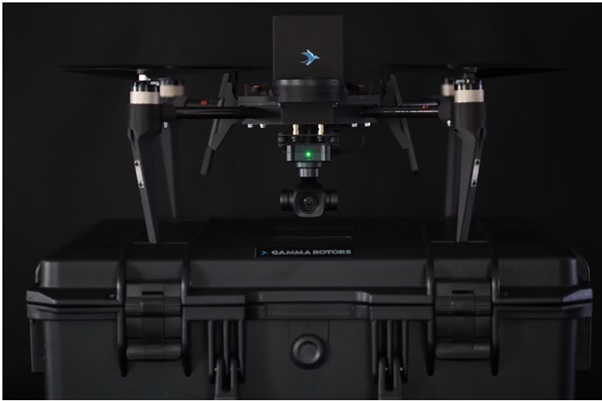 |
Gamma Rotors
The policy direction has become increasingly clear. Addressing the National Defence Industries Conclave, Defence Minister Rajnath Singh said India must become a global hub for drone manufacturing, describing indigenous drone production as critical for strategic autonomy and defence preparedness. The government also highlighted that 676 startups, MSMEs and innovators are now part of the iDEX ecosystem, with 58 prototypes worth Rs 3,853 crore receiving procurement clearance and 45 procurement contracts valued at Rs 2,326 crore already signed. (via Press Information Bureau)
This policy push is beginning to translate into procurement. India is preparing what could become its largest-ever military drone acquisition programme, with domestic orders expected to exceed USD 2 billion (over Rs 17,000 crore) this year. (as per Reuters)
Operational capability becomes the new differentiator
To bring this vision to life, manufacturers are increasingly being judged not only by technology but also by their ability to manufacture, deliver and support systems at scale.
Delhi-based Gamma Rotors is among the companies benefiting from this shift. The defence UAV manufacturer recently announced that its order book has crossed Rs 60 crore, while projecting FY26 revenue of approximately Rs 30 crore.
The company had earlier raised Rs 27 crore in January 2024 by issuing 19.72 lakh shares at Rs 137.42 per share, implying a post-money valuation of approximately Rs 180 crore based on its 1.30 crore outstanding shares. The capital has since been deployed towards expanding manufacturing capacity, strengthening in-house R&D, and building a resilient supply chain to cater to rising demand from the Indian Armed Forces, central paramilitary forces and state police units.
Gamma Rotors says its growth has been underpinned by operational deployments rather than demonstration projects. During Operation Sindoor, the company executed urgent deliveries of its Nighthawk, Powersorous and Striker UAV platforms for the Indian Army, leveraging its in-house 3D printing and digital manufacturing capabilities to significantly compress production timelines.
The company has also accumulated more than 10,000 flight hours, delivered over 650 drones, serviced more than 2,000 UAVs (including third-party platforms from ideaForge, Asteria Aerospace, Prox Dynamics and DJI), while training over 3,000 defence personnel.
Strengthening investor confidence with large order books
Listed drone manufacturer ideaForge Technology continues to remain one of the largest organised players in the segment.
For FY26, the company reported its highest-ever annual order bookings of approximately Rs 530 crore, while executing nearly 40% of its open order book during the fourth quarter. Importantly, ideaForge has announced its entry into the combat drone segment, including long-range strike drones and loitering munitions, to address upcoming military procurement opportunities beyond its traditional intelligence, surveillance and reconnaissance (ISR) portfolio.
Investor confidence in the sector is also reflected in market valuations. ideaForge currently commands a market capitalization of around Rs 4,268 crore against annual revenue of approximately Rs 226 crore, translating to a price-to-sales multiple of nearly 18x. Such premium valuations indicate that the market is pricing in strong long-term growth expectations, driven by expanding defence procurement, a robust order pipeline and the increasing role of indigenous drone manufacturers in India’s evolving defence ecosystem.
Another rapidly expanding player is Raphe mPhibr, which has invested heavily in manufacturing infrastructure. The company recently expanded its production footprint in Noida through the acquisition of an additional 11.5-acre industrial site, complementing its existing defence manufacturing facility where it has reportedly invested around Rs 800 crore. Raphe has also developed indigenous military-grade autopilot systems and drone engines, with its platforms seeing operational deployment during Operation Sindoor.
Manufacturing depth will define the next phase
The competitive landscape is also evolving beyond startups. Larger defence companies including Tata Advanced Systems, Larsen & Toubro and Adani Defence have expanded their unmanned systems capabilities, while DRDO-backed programmes continue to create opportunities across surveillance, logistics, loitering munitions and armed UAV platforms.
For emerging manufacturers, however, competitive advantage is increasingly shifting towards manufacturing readiness rather than simply platform development. The ability to rapidly fulfil defence orders, maintain indigenous supply chains, support lifecycle maintenance and train operators is becoming as important as technological innovation.
As India’s procurement pipeline expands and the military increasingly favours indigenous platforms under the Atmanirbhar Bharat framework, companies that combine proven operational performance with scalable manufacturing are likely to capture a growing share of the market.
